
Web Pages Are 180x Heavier Than 30 Years Ago: The Software Bloat Crisis
En bref
From 14 KB to 2.5 MB in 30 years: how software bloat made websites 180 times heavier. Discover the causes of digital obesity and practical solutions for a lighter, faster web.
Introduction
Imagine yourself in 1995, browsing the nascent World Wide Web with your 56k modem. Web pages were light, simple, and loaded in seconds. Today, the web is radically different. Pages have become true digital heavyweights, a phenomenon experts call “software bloat” (the combination of obesity and software). Indeed, the average weight has gone from 14 KB to 2.5 MB for desktop versions (HTTP Archive, 2023), a 180-fold increase in barely 30 years.
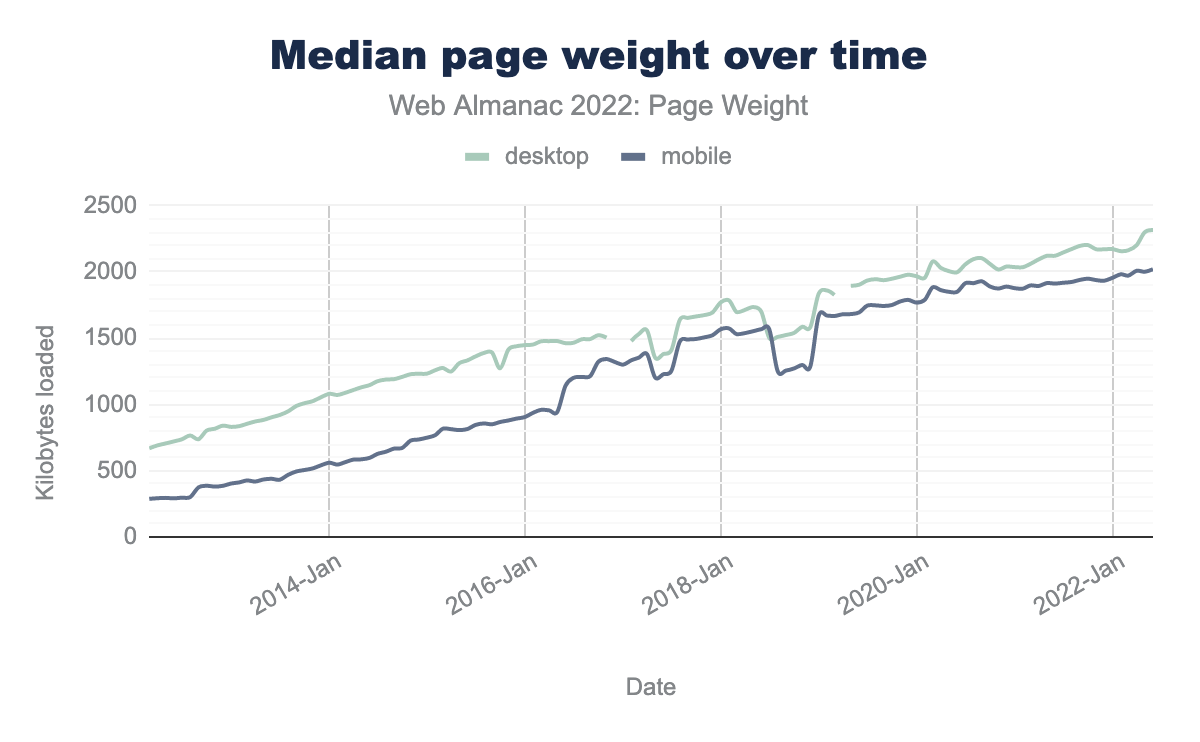
From Minimalist Web to Obese Web: A Dizzying Evolution
1995: When 14 KB Was Enough for a Website
In the early days of the web, pages were mainly composed of text and basic images. A typical site in 1995 weighed about 14 KB. Internet connections at the time, limited to a few kilobits per second, made this lightness necessary.
2024: How Did We Get to 2.5 MB Per Page?
The improvement in connection speeds has encouraged the integration of increasingly rich content on the web, illustrating a major rebound effect: the faster connections become, the heavier sites grow to occupy available bandwidth. This evolution happened gradually:
Images: Multiplication of high-resolution images for HD screens, shift from GIF to JPEG/PNG. Despite the arrival of more recent formats like WebP and AVIF, average image size has continued to increase with bandwidth improvements, without real optimization.
Video: Democratization via platforms like YouTube, making embedded players omnipresent. High-definition videos have become the norm despite their considerable weight.
Animations: Evolution from simple GIFs to Flash, then to CSS3/HTML5 standards for fluid effects, always consuming more resources.
JavaScript: Massive adoption of frameworks (React, Vue.js, Angular) transforming static pages into complex applications (SPA). JavaScript now represents 25% of page weight on average (624 KB, HTTP Archive 2023), with a significant impact on client performance due to runtime and dependencies. This constant complexification perfectly illustrates the digital rebound effect.
The Consequences of Software Bloat
The constant increase in web page weight has important repercussions, both environmentally and societally.
Environmental and Energy Impact
The digital sector is now responsible for 3 to 4% of global greenhouse gas emissions, with a concerning projection to 7% by 20402. Video streaming, which represents 60% of global data traffic3, perfectly illustrates this resource overconsumption. Each additional megabyte transmitted implies increased energy consumption, from servers to user devices.
Digital Divide and Accessibility
Software bloat deepens digital inequalities. In areas where internet access is limited or expensive, overloaded websites become practically inaccessible. This situation also forces premature equipment replacement, as older devices struggle to handle the growing complexity of modern web pages. The result? A double penalty: environmental and financial.
Web Eco-Design: 3 Pillars for a More Responsible Web
Web eco-design proposes a structured approach to reduce the environmental impact of sites. The following diagram presents the three fundamental technical axes for optimizing performance and digital sobriety of a web application.
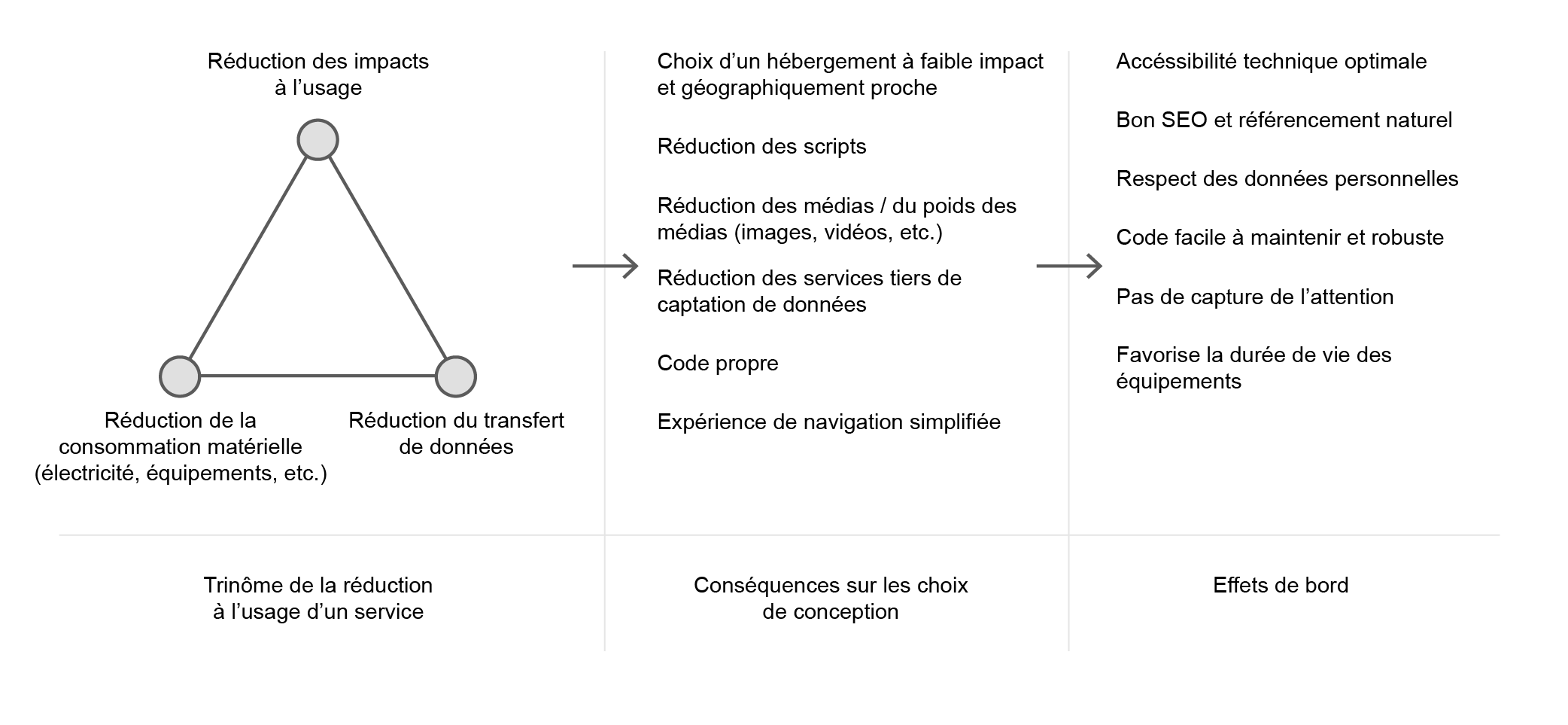
Diagram of web eco-design principles. Source: Low-tech Lab
1. Reducing Usage Impacts
The best code is the code you don’t write
Objective: Minimize client-side resource consumption by radically simplifying user experience.
How?
- Prioritize the essential: Focus only on features that bring real value to users
- Minimalist interface: Design a fluid and intuitive experience, without frills or superfluous animations
- Mobile-first: Adopt an architecture optimized for mobile devices, where every KB counts
2. Reducing Material Consumption
The greenest energy is the energy we don’t consume
Objective: Optimize the use of physical resources (servers, networks, equipment).
How?
- Responsible hosting: Choose eco-certified hosts Green Web Foundation and geographically close to users
- Mutualization: Maximize server utilization through containerization and resource sharing
- Right-sizing: Precisely dimension infrastructure according to actual needs
3. Reducing Data Transfer
Every byte counts
Objective: Minimize the volume of data exchanged between server and user.
How?
- Lightweight architecture: Favor static frameworks like Astro to reduce client-side JavaScript
- Optimized media: Use modern formats (AVIF, WebP) with appropriate compression
- Controlled dependencies: Avoid non-essential third-party scripts (trackers, analytics…)
- Cache and optimized loading: Implement an effective caching strategy and use lazy loading for non-critical resources (images, videos, scripts)
The combination of these three axes naturally guides towards virtuous choices: local hosting, optimized code, simplified experience. The benefits affect performance as much as accessibility and sustainability. To go further, the book “Web Eco-Design: 115 Best Practices” by Frédéric Bordage (Eyrolles, 2022) is an essential reference. The author, an expert in digital sobriety, details concrete practices for designing responsible web services, drawn from his field experience.
2. Evaluation and Measurement Tools
To measure and improve your website’s environmental impact, several free tools are available. Here’s a selection of the most relevant for managing your eco-design approach:
- EcoIndex evaluates overall environmental impact
- Website Carbon Calculator calculates carbon footprint
- GTmetrix analyzes performance in detail
- Kastor.green performs eco-design audits
The RGESN repository5 provides a complete methodological framework to structure your improvements.
Conclusion: Toward a Responsible Web
The explosion of web page weight is not inevitable. Eco-design offers a concrete path toward more performant and sustainable digital services, with tangible benefits: reduced environmental footprint, improved performance, optimized costs, and better accessibility. It’s also a vector for strategic opportunity - according to Google4, a lighter site significantly improves user experience and natural referencing, with a direct impact on business metrics: a loading time going from 1 to 3 seconds increases bounce rate by 32%.
The tools and best practices are here. All that remains is to take action. Want to contribute to a more responsible web? Contact us to realize your eco-design approach.