
The Carbon Footprint of Digital: Comparable to Civil Aviation
En bref
The digital sector represents between 3% and 4% of global greenhouse gas emissions, comparable to civil aviation. Discover the key figures and issues of this growing environmental footprint.
A Significant Contribution to Global Emissions
The digital sector today represents a non-negligible share of global greenhouse gas emissions. According to the most recent estimates, the carbon footprint of digital is between 3% and 4% of global emissions1 2 3. To put this in perspective, it’s comparable to civil aviation emissions, estimated at about 3% of the global total4.
Rapid and Concerning Growth
What makes digital’s footprint particularly alarming is its rapid growth. Emissions related to digital are increasing by approximately 6% to 8% per year2 4, much faster than the average for other sectors. This trend risks accelerating further with the rise of generative artificial intelligence, whose models require considerable computing power, as well as the deployment of 5G which encourages premature replacement of mobile devices to benefit from new performance. Without concrete and immediate action to counter these technological rebound effects, this share could reach critical levels in coming years.
Main Emission Sources
The carbon footprint of digital comes from three main sources:
- User equipment (computers, smartphones, etc.)
- Data centers
- Telecommunications networks
Among these sources, equipment manufacturing represents the largest share, about 80% of digital’s total footprint6, 7. This is explained by the intensive extraction of resources and energy use required for electronic device production.
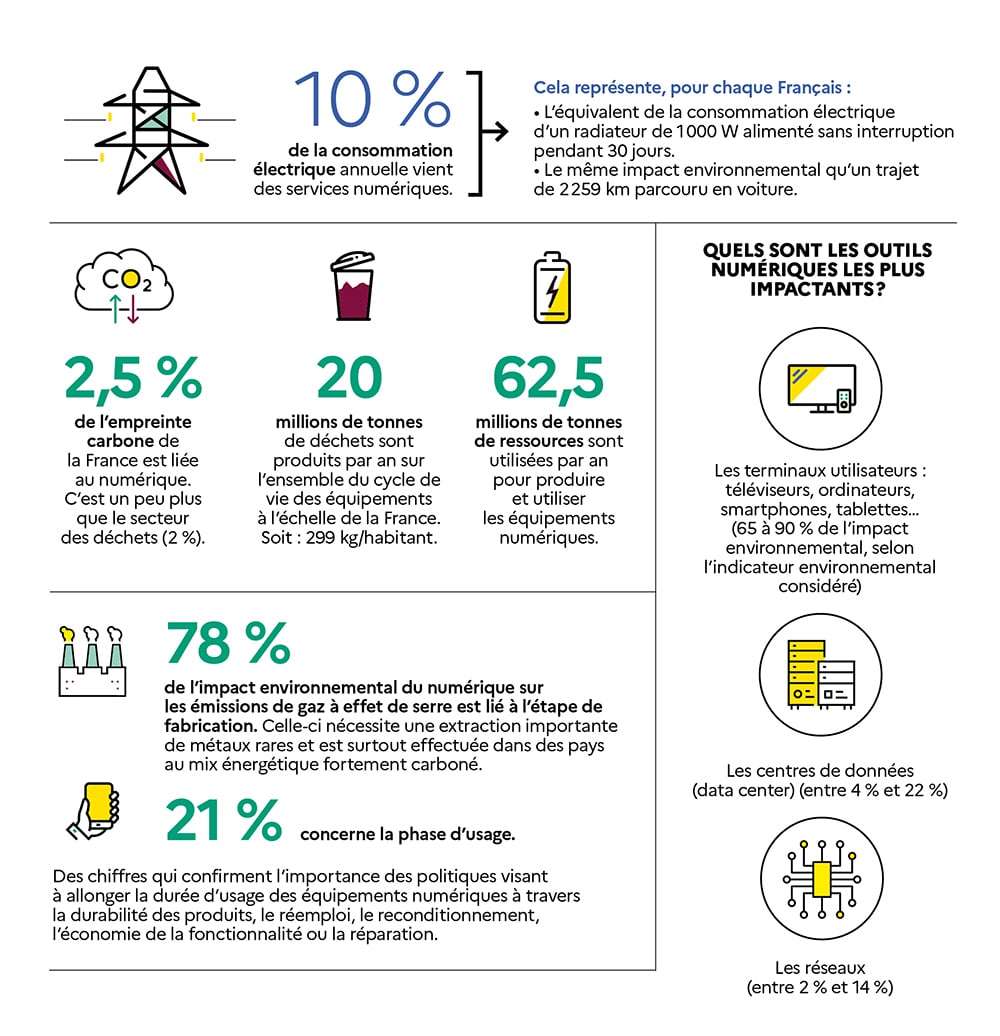
Figure 1: Infographic illustrating the distribution of digital’s environmental impact between equipment, networks, and data centers. Source: ADEME
Impact by Equipment Type
Desktop computers have the highest carbon footprint, with 948 kg of CO2 equivalent over their entire lifecycle, closely followed by televisions (897 kg)8. Smartphones, although individually less emissive (about 60 kg CO2 equivalent), have a considerable cumulative impact due to their number and short lifespan8.
Beyond Carbon: A Broader Environmental Footprint
It’s important to note that digital’s impact is not limited to greenhouse gas emissions. The sector also has a significant footprint in terms of:
- Water consumption: for example, Google’s data centers consumed over 21 million cubic meters of water in 20229
- Waste production: 20 million tons of electronic waste are generated each year in France10
- Resource use: manufacturing a 2 kg computer requires on average 800 kg of raw materials9
Perspectives and Challenges
Faced with this situation, the digital sector must imperatively reduce its carbon footprint, but above all question the relevance of its uses. The set objective is a 45% reduction in emissions by 2030 compared to 2020 at the global level2. To achieve this, several avenues are being considered:
- Systematic evaluation of the benefit/environmental impact ratio of each new digital service
- Questioning the real necessity of features before their development
- Prioritizing applications with strong positive societal impact (health, education, environment)
- Extending equipment lifespan and fighting planned obsolescence
- Developing the circular economy in the digital sector
- Raising user awareness of more sober and thoughtful digital use
- Adopting web eco-design practices by favoring simplicity and efficiency
- Limiting the deployment of energy-intensive technologies (e.g. AI) to essential use cases
Conclusion
The carbon footprint of digital has become a major issue in the fight against climate change. Although the sector offers many opportunities to reduce emissions in other areas, it’s crucial that it controls its own growth and environmental impact. This will require concerted efforts from industry, governments, and consumers to rethink our relationship with technology and adopt more sustainable practices.